Category Archives: Public History

African American Legacy Sites

A recent message from Annie Evans of New American History encouraged educators to bring history alive in their lives with a spring break trip to a historic site. Although I’m now retired from teaching, I did that by visiting three amazing African American Legacy sites recently created by the Equal Justice Institute

The first site, The Legacy Museum, founded by Bryan Stevenson, originally opened in 2018. An expanded version later reopened in a former cotton warehouse in Montgomery, Alabama, where enslaved people were forced to labor.

We walked to the museum through the Legacy Plaza across the street, a lovely flowered park where one can sit and enjoy statues of MLK, Rosa Parks, and John Lewis.

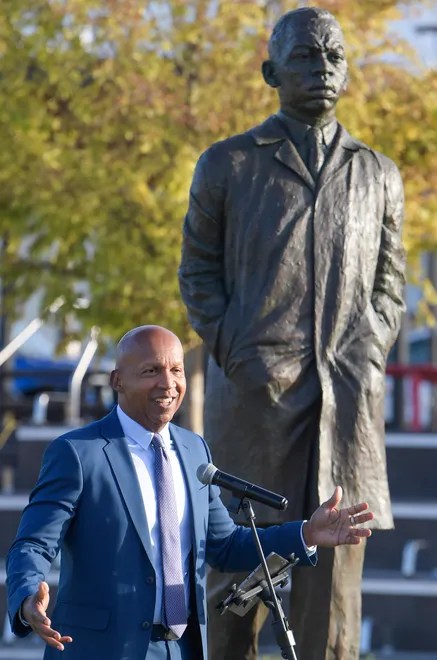
Bryan Stevenson standing next to metal sculpture of John Lewis
Bryan Stevenson unveiled the John Lewis statue Stride Toward Justice by Basil Watson.
Photo: Mickey Welsh, Montgomery Advertiser, Nov. 12, 2024.
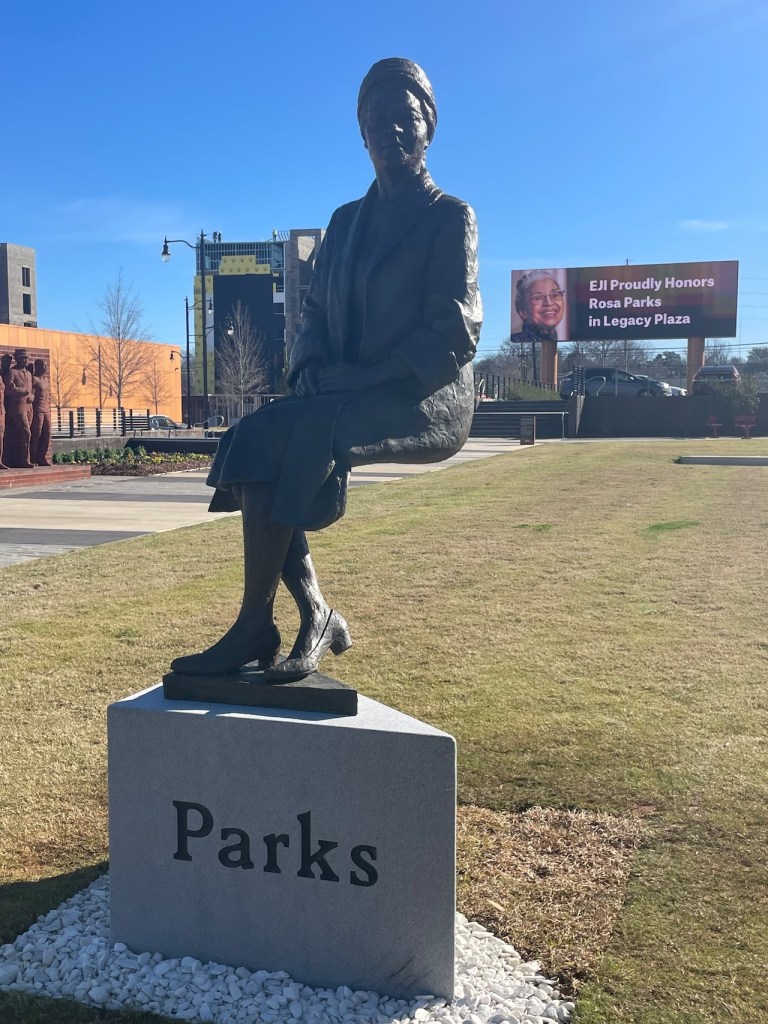
Metal sculpture of a sitting Rosa Parks
Watson’s Rosa Parks statue in Legacy Plaza.
Photo: Savannah Tryens-Fernandes
Continue reading African American Legacy Sites

Black History Month: Civil Rights Movement

I haven’t usually made a big deal of Black History Month. That’s because I feel Black history should be acknowledged year-round, routinely taught in schools, and understood by all Americans.

But in the context of efforts to erase African American history in National Park Service sites, including recent new ones in Philadelphia, and President Trump’s appalling unapologetic sharing of a video depicting the Obamas as apes, I value the month much more.

One aspect of African American history we should appreciate is the centuries-long effort to attain civil rights. While that’s a massive topic, today I’ll focus on the Black civil rights movement during the mid-1950s through the mid-1960s

Continue reading Black History Month: Civil Rights Movement

National Park Service Historic Sites

Recently (before the federal government shutdown), I was able to visit the Eleanor Roosevelt National Historic Site, which I’d been hoping to do for a long time.

It was a great visit. The grounds were gorgeous, and we had an excellent tour guide who took us through the house where Roosevelt lived in much of her later life. We learned about Eleanor’s childhood, education, marriage and family, other relationships, writings, and community and political activities.

Eleanor hosted all sorts of visitors to her home – royalty, Nehru, Hollywood stars, friends like Pauli Murray, and JFK hoping for an endorsement (which eventually she gave, reluctantly). You can learn more about her life on the cultural landscape page.

The site included a biographical video, small exhibits, and walking trails that she traversed regularly. I especially enjoyed seeing some of her powerful quotations highlighted. Yes, I even bought a t-shirt and magnet featuring two of them.

Our tour began in front of placards about the Universal Declaration of Human Rights, which she saw as her proudest achievement. Eleanor had chaired the United Nations committee that drafted the declaration, which in the wake of the atrocities of World War II, aimed to find common ground among diverse nations and cultures about individual rights. Getting it passed was extremely difficult. 

I found the visit inspiring in many ways – except for one. It was clear that National Park Historic sites are feeling the chilling effects of the Trump Administration’s desire to control messages about American history. 

Continue reading National Park Service Historic Sites